
 Posts
Posts


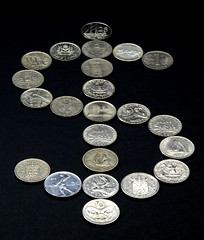 Saving Money at Your computer in the Next Hour
 Photo by pflafa
As you examine this, you’re prone to be sitting at your computer with Internet access. You have a little of free time, so you’re in search of some thoughts on money management or on your life.
Here are several useful tips on saving money in under an hour.
Find a better bank - I’m often stunned to find that the majority of people seem to be very dejected with their primary bank. They’re charged needless fees, don’t bring in much interest, and are deeply inconvenienced by the service or the ATM network.
These issues are not only an irritation - they cost you genuine money that adds up to huge sums over time.
I am here to tell you that it does not have to be that way - There are countless banks out there with great customer service, fee-free ATM networks, no outlandish fees to simply retain a checking account, and offer interest on even fundamentally small checking accounts.
I currently use ING Direct’s Electric Orange checking, for instance, after having deserted checking and savings accounts with a large nationwide bank, and that change has saved me $75 a month per month in the months since the change.
Search around for a better bank - There are a ton of options besides ING - glance at HSBC Direct, FNBO Direct, and E-Trade are all high-quality banks that have strong customer service goals, keep the fees from draining your cash, and offer interest on the checking.
Don’t base your conclusion exclusively on interest rates, though, as those differ quite a bit over time - instead, do a Google search to find reviews on all the banks and keep a cautious eye out for customer service feedback.
Most banks allow you to sign up for their services online, so if you settle on going the full nine yards, you can essentially begin the course of switching to a different bank right at your PC.
Set up an automatic savings plan - Though it’s an enormous plan to use a full-service bank for your main checking, for lots of people, it’s superior to have a bank savings account set aside for emergency funds.
While I usually utilize a savings account at my bank for my emergency finances, I usually hunt first and foremost for the top rate when I’m saving for a particular goal (like electronic or appliance replacement).
One first-class place - to accomplish that is with SmartyPig and if you do sign up with them, they present a strong rate of interest if you start an automatic savings plan with their company, they also pitch in discounts from certain retailers if you meet your savings goal.
So, if you need to replace an appliance in the next few months, set that up as an objective with SmartyPig, earn a good rate of interest as you save, and get a price cut on the item itself when you reach the target. I’m currently using SmartyPig to save up for a new LCD television by putting away just a few dollars a week.
Another great way to discover a high-interest savings account - just for setting some money aside is Bankrate.com’s savings account yield rate listing. It allows you to observe the highest rates available nationwide for savings.
Read your local store’s flyer - and arrange a meal preparation and shopping list It’s so easy to arrange a meal plan and shopping list, yet many people bounce and head to the local store cold. Just a few minutes of preparation work can save you a bit of cash and also make your shopping spree shorter - and there is no faster place to do it than right at the convenience of your computer.
Visit the website of your store and download their weekly flyer - Look through the flyer and spot a few interesting things that are on sale, and use those things as the backbones of the meals for your approaching week - make a listing of the meals, in fact. If you need assistance, use a recipe catalog like RecipeSource to fill in the holes. Then, from that listing of meals, create a grocery listing that includes all of the items you need. You can create both the meal preparation and the grocery listing on your PC’s texting editor or at Google Docs.
Once you’re satisfied, print off the list and head to the store - Shopping by a grocery list is not only quicker than drifting the aisles, it’s also cheaper.
Do some research for an impending major purchase - Whenever you make an important purchase - and I view important as being anything over $25 o - you owe it to yourself to do research into making that purchase, whether it’s simply to make sure you’re buying precisely what you want or making sure you’re receiving the right price. Doing this, however, can be time consuming. Here are a few guidelines to help get you started.
ConsumerReports.org - I use Consumer Reports as the opening point of many of my most important purchases (and many of my minor purchases, too). I use their information as the preparatory point for purchases and as a good indicator of the comparative quality of a given item compared to the competition
Thump on over to Twitter Search and Technorati for detailed comments from actual users - Both of these tools expose what people are saying about specific items and companies.
Sign up for an exchange service - I enjoy watching movies and I particularly enjoy reading books. Sure, I can use the library for these things, but I have to keep in mind to return them and I can’t make my own markups on the books if I want to. I’d rather to have a copy of my if I find long-term worth in it, but I also like to have the flexibility to lose the item if I don’t want to keep it over the long run.
So what do I use? - I use PaperBackSwap to trade my books by mail and SwapADVD to trade with DVDs. It’s easy - just sign up, designate ten books or DVDs that you’re ready to send to other people, and you collect two credits that you can use to ask that other books (or DVDs) be sent to you (the cost is currently one credit each). When someone needs one of your books, wrap it up and send it out (it costs about $2.00), and you’ll get an additional credit. The end result is that you can trade DVDs and books you don’t want for DVDs and books you do want for about $2.00 apiece, which is much cheaper than buying them.
I’ve been their services for years and I’ve had nothing but success with them.
Set up a Roth IRA Account - Countless people out there think they should be saving for retirement, but it seems like a huge obstacle. How does one even get started on something like that? The truth is you can actually get started right at your writing table. Many investment firms have Roth IRA plans that are simple to sign up for - all you need is a web browser. From there, you can set up an automatic contribution from your checking account into your Roth IRA. This is precisely how I signed up for my Roth IRA through Vanguard.
The first step is to make sure a Roth IRA is precisely for you. Are you qualified for a retirement plan through your job and, if so, do they provide matching donations into that plan? If that’s the case, it’s worth signing up for their plan just to get the match. Are your earnings under the limits for a Roth IRA? If you earn less than $100K, you’re all right, but if not, you’ll want to check the eligibility rules.
Also, are you at present earning considerably more than you expect to bring rake in retirement? If so, then the Roth IRA might not assist you in terms of taxes - look for a regular IRA for your savings, or see if there is a 401(k) or 403(b) plan available at your place of employment.
What should you invest in? - For many individuals, a simple “target retirement” index fund is the top choice. It automatically balances your retirement savings for you, keeping you aggressively in stocks when you’re young and stepping up to more stable bonds and cash as you draw closer to retirement. Most investment houses offer “target retirement” options.
Once you’ve made your choices, though, signing up for a Roth IRA is in fact quite easy. Just fill out the online forms, set up an automatic deduction from your checking account, and watch your retirement savings begin to grow.
Good luck!
Like this article?


 Facebook




2 comments:
Great tips. I love the swaps idea and will be looking into higher interest savings accounts. I'm baffled at the $75 dollar savings...I'm sure your fees weren't that high...was it the increase in interest?
Triad,
Yes the fees do add up when paying to see a bank teller during more complicated transactions. I agree, and have since switched and mostly manage everything myself now. Thanks for your post!
Post a Comment